Happy Readers make Happy Children
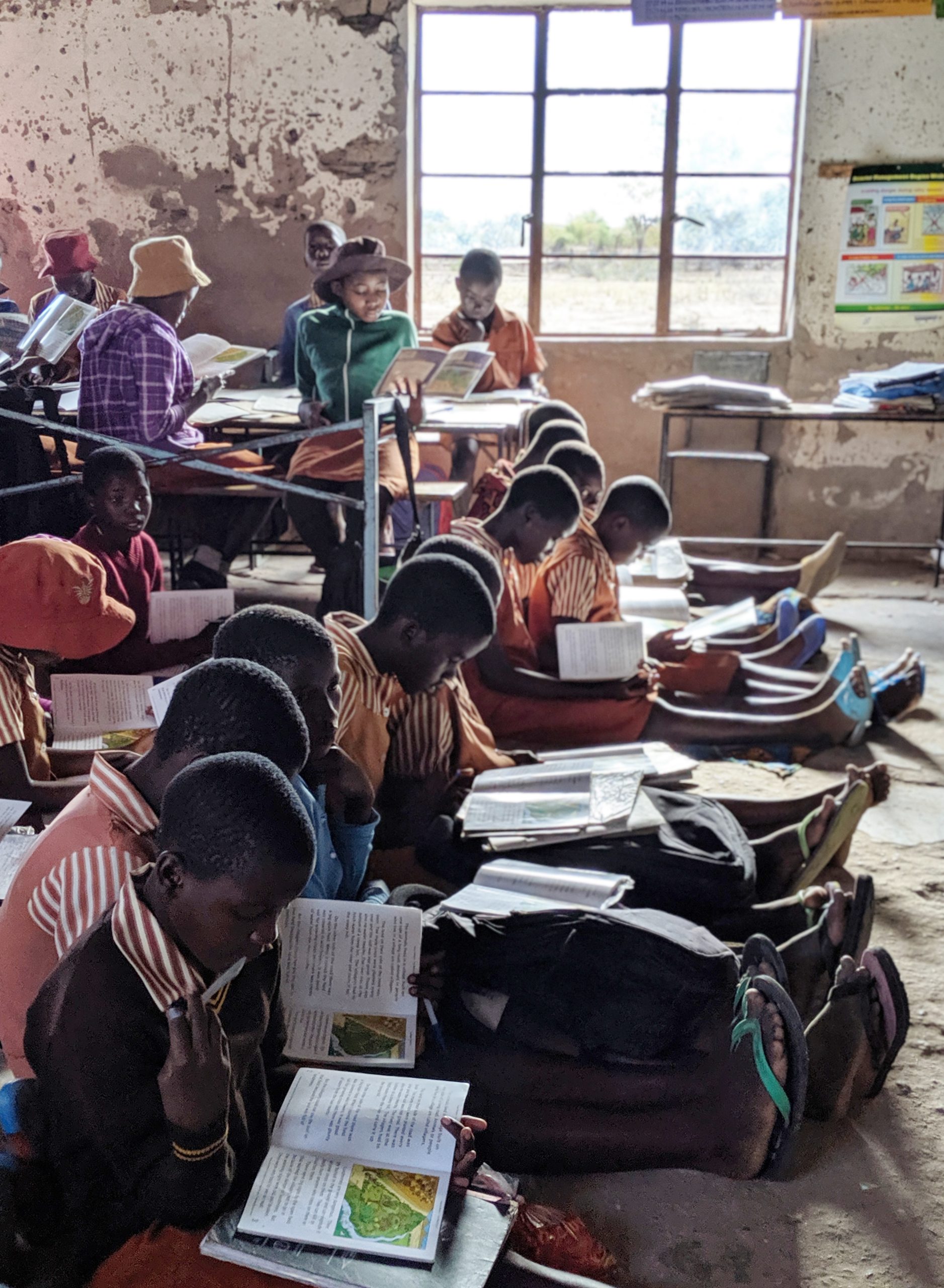
Equipping learners and teachers with tools to succeed
Happy Readers is a comprehensive literacy programme supporting early and middle primary education in Zimbabwe, Zambia, and Malawi. We provide structured Learn-to-Read books, teacher training, and classroom resources, all approved by relevant Ministries of Education for use in schools. Supported by donor funding, the programme is cost-effective, accountable, and designed to deliver measurable outcomes.
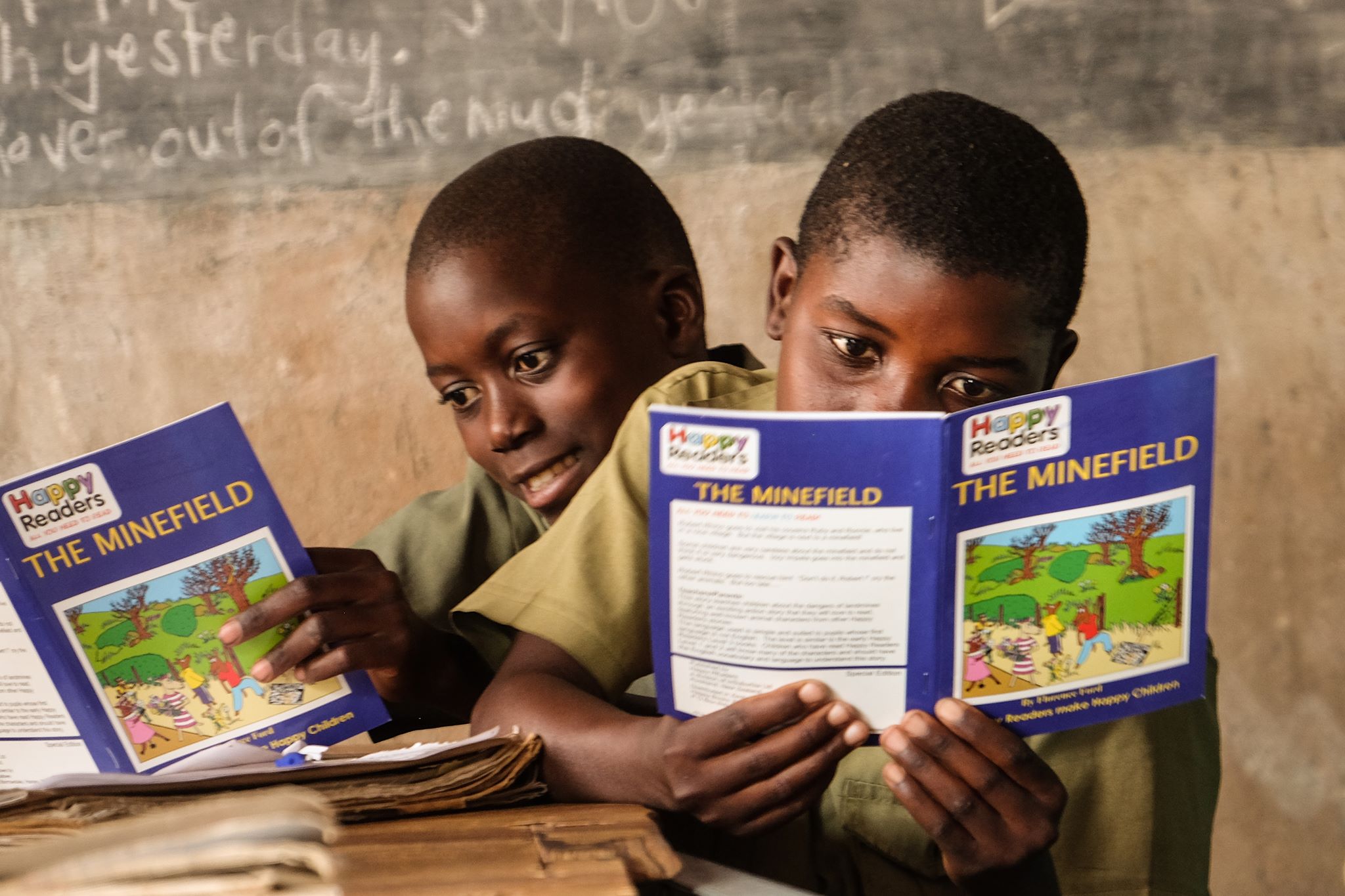
Literacy through local context.
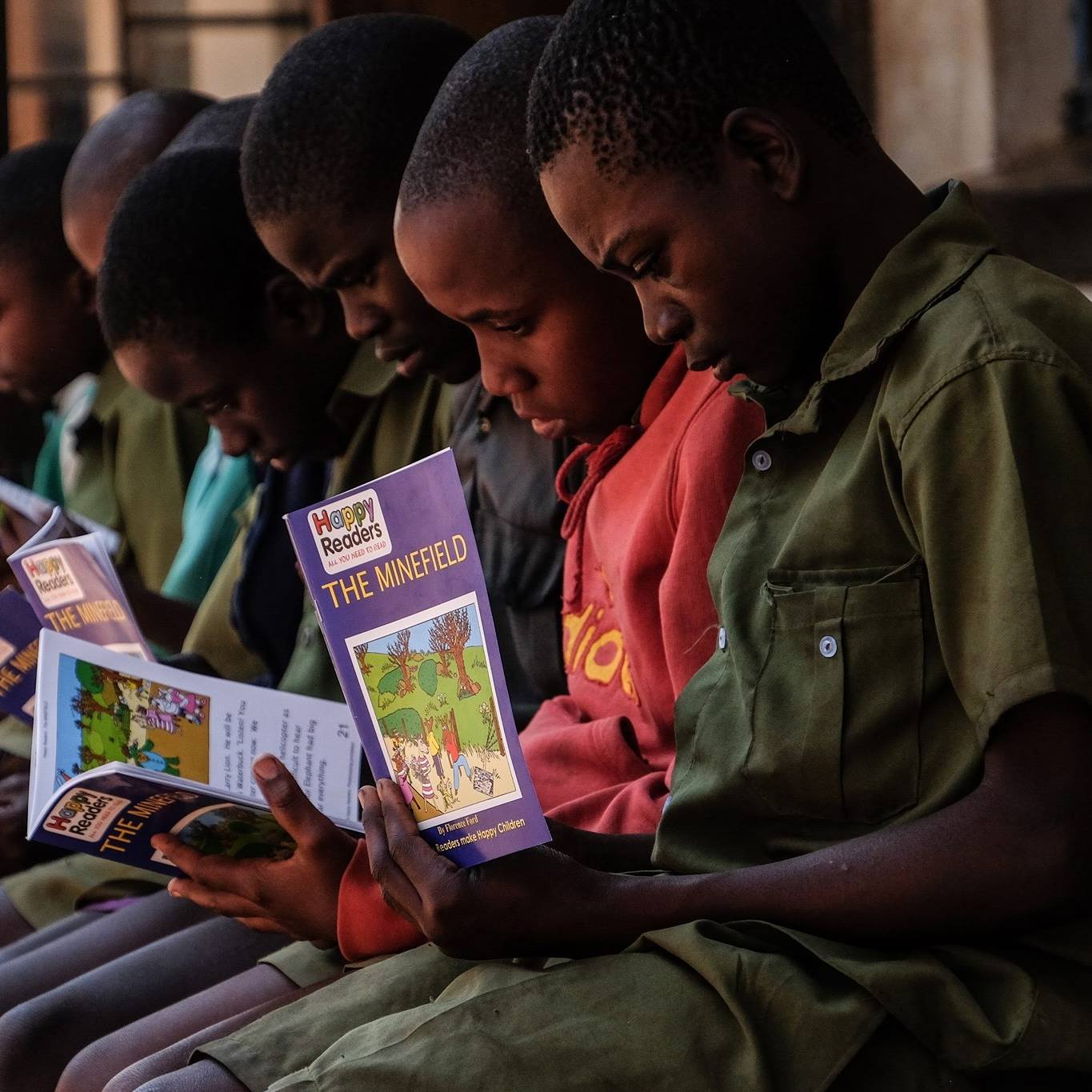
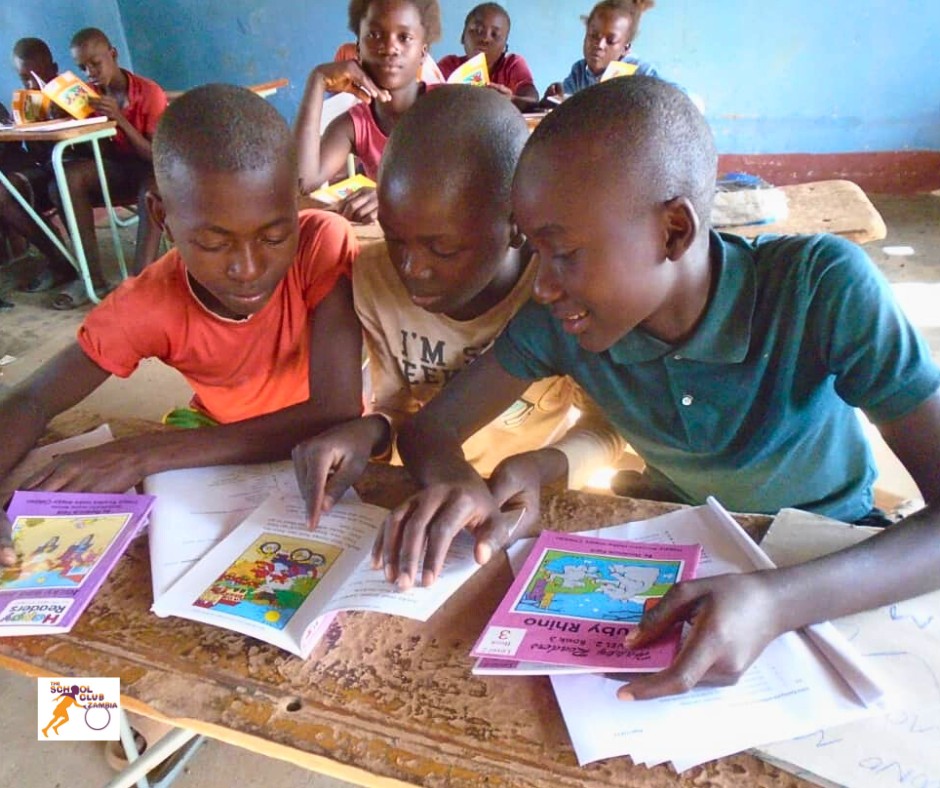
Happy Readers uses relatable African stories, familiar environments, and engaging animal characters to promote reading fluency and comprehension. Lessons incorporate social and moral themes, creating a learning experience that is both educational and culturally meaningful. Participating schools frequently achieve literacy outcomes exceeding 70%.
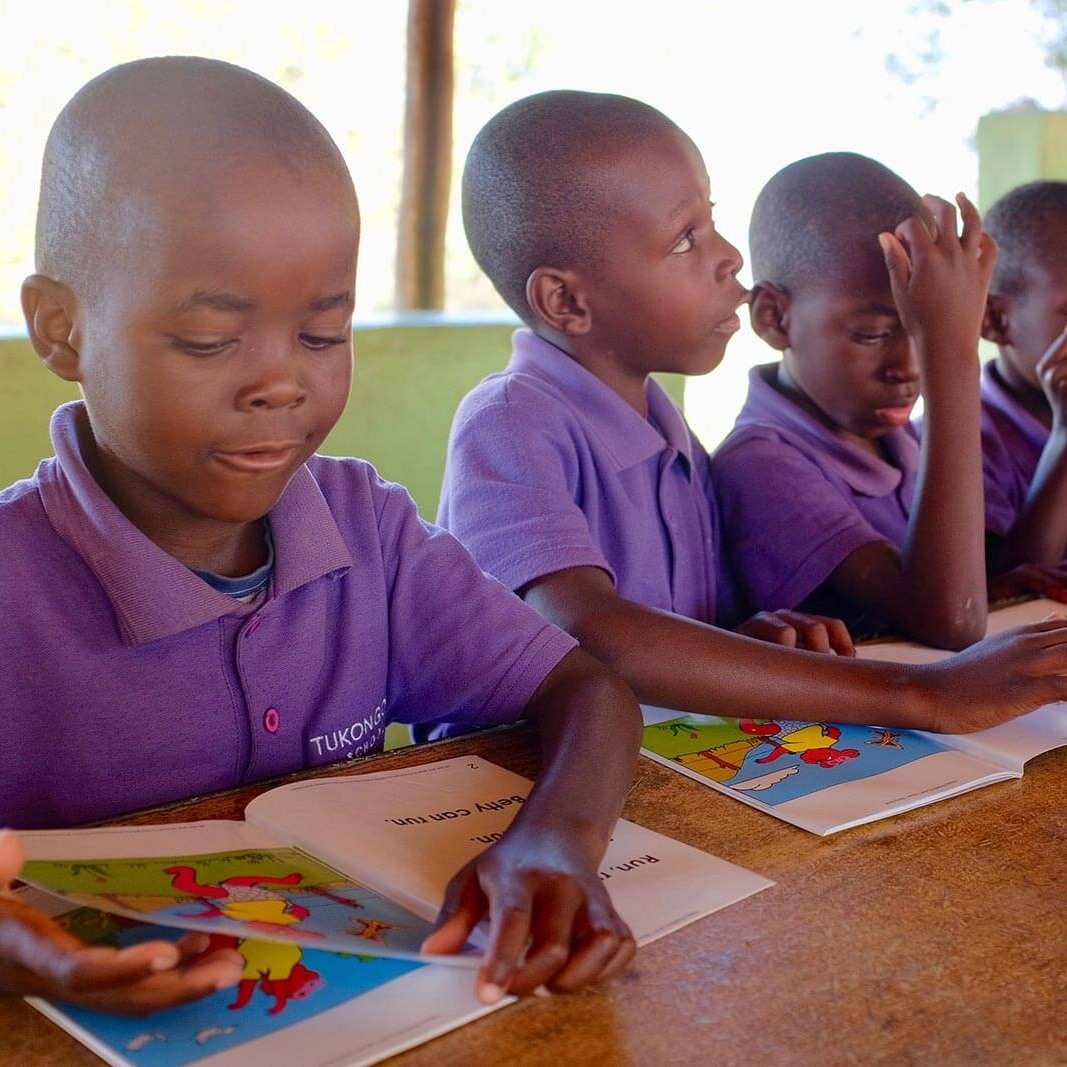
“I like reading Happy Readers. I now come to school early so as to read the books.”
– Learner
Literacy is the foundation of all learning
A child who cannot read is unable to fully engage with the curriculum or benefit from their education. In many African countries, English is the language of instruction, assessment and examinations. Happy Readers bridges the literacy gap, enabling learners to transition from learning to read, to reading to learn.

Improved literacy leads to better life outcomes.
Many of the social challenges faced in rural and marginalised communities — including child labour, early marriage, and poverty — are linked to a lack of education. By encouraging reading through stories children relate to, Happy Readers not only teaches literacy, but fosters awareness of alternative, positive life choices.
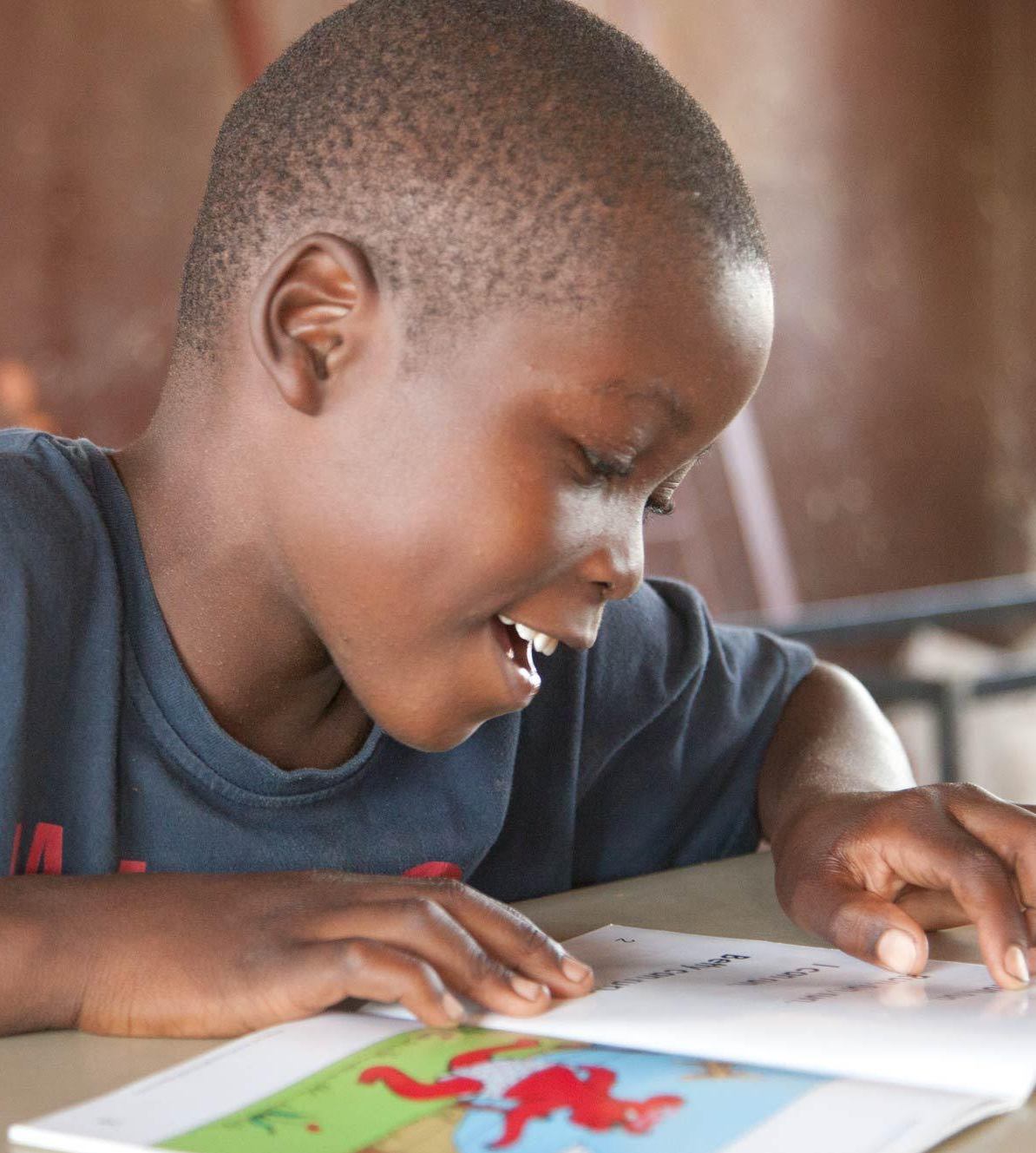
“After students read Happy Readers, they were able to share summaries of the stories they read, and the stories sparked up discussions.”
– Teacher
A Project Snapshot
Zimbabwe, 2023–2024 – 40 Schools
Word Reading Progress
From struggling to start to confident readers!
• 2021: Only 11% could read 30 basic words (Grade 1 level).
• After 1 year on Happy Readers: 47% reached that goal.
• Learners on Level 2: an incredible 75% hit the target.

Story Reading Fluency
Building speed and understanding.
• 2021 average: 5 words per minute.
• After 1 year: 22 words per minute.
• Level 2 learners: reached 46 words per minute
(the fluency needed for true comprehension is 45+).

Overall Reading Test Scores
Better reading. Better comprehension. Better confidence.
• 2021 average: 13%.
• After 1 year on Happy Readers: 51%.
• Level 2 learners: achieved 78%.
A recent Happy Readers Literacy project in Livingstone, Zambia, supported by the Australian Embassy has seen huge increases in literacy among those children that used Happy Readers.
Children that used Happy Readers showed a literacy rate of 75 to 90% after 18 months as compared to 10 to 25% for those children that did not use the programme. The average literacy rate before using Happy Readers was 32%.
A farm school in Macheke, Zimbabwe recorded literacy levels of 88% & 91% in its Grade 1 and 2 classes after 2 years of using Happy Readers in those grades. The middle and upper grades at the same schools (who had not used Happy Readers) had literacy levels of under 10%. There are several other case studies that have shown similar results.
Impact of Happy Readers over 1 year in a new school
Grade 2 & 3:
Illiteracy (zero word scores) dropped from 40% to 15%.
Leaped ahead with headline literacy rates of over 55%.
Grade 4 & 5:
Illiteracy rate was halved from 20% to 10%.
Sentence reading scores were up by 86%, and comprehension scores up by 64%.
The statistical analyses have been solidly backed up by qualitative assessments and heads, teachers and pupils all attribute the improvements in reading, confidence and English language to the use of Happy Readers.
“A particularly striking observation I have made since the introduction of the Happy Readers series at my school is the remarkable improvement in reading fluency by the children. This development is more pronounced when children are… [reading] the Happy Readers. I think this phenomenon can be attributed to the enlarged print the books use and the interesting stories that fire their imaginations and fantasies. The stories, unlike . . . [those] in our traditional readers which tend to be formal and factual, are highly imaginary and take the child to the world of wonder and dreams. The nature of the Happy Readers stories completely captures the interest of the child and holds it there.”
– Head. Miske Watt Evaluation
THE BOOKS
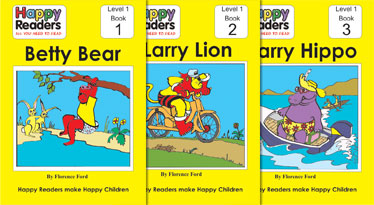
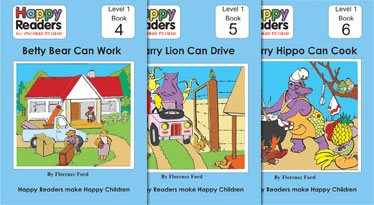
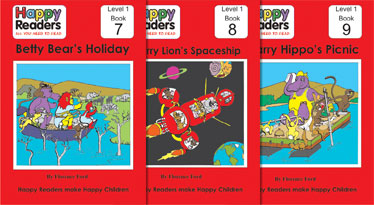
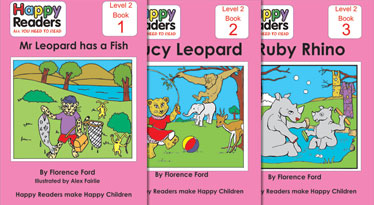
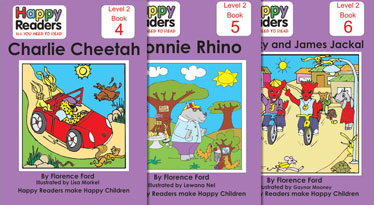
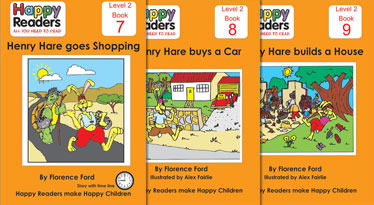
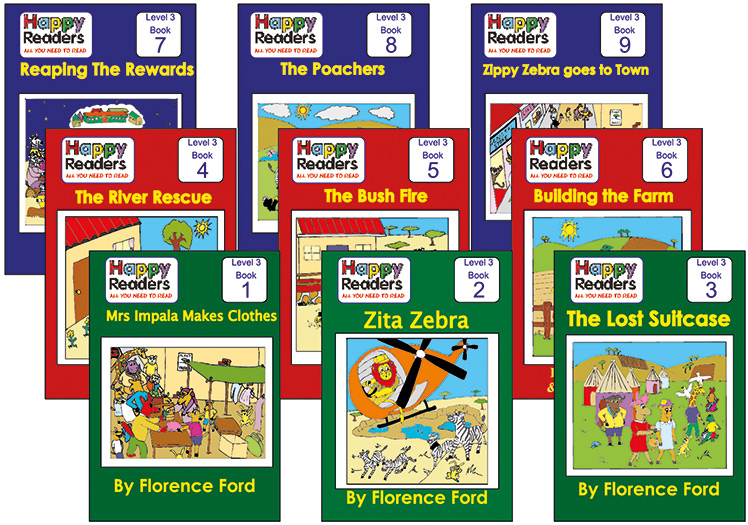
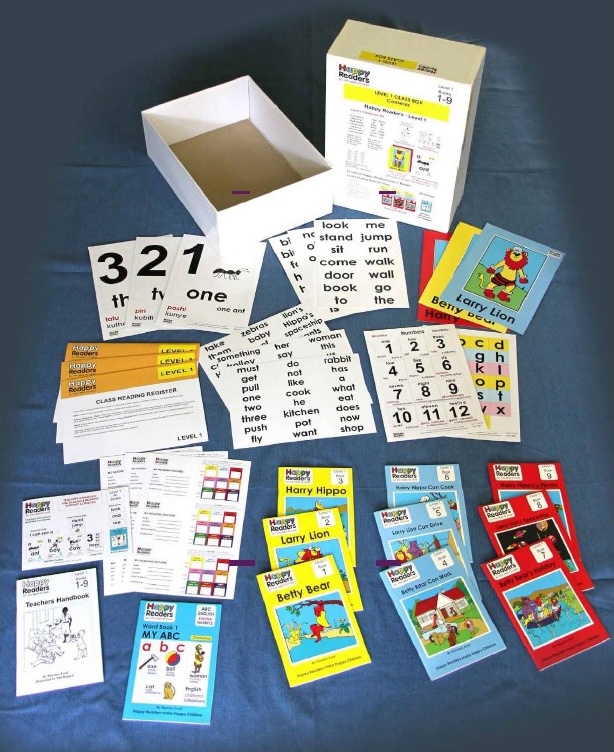
Happy Readers learn to read books address many of the issues around literacy in Africa and are designed to help children overcome barriers to reading arising from the lack of appropriate and affordable reading materials. Happy Readers are a series of books, which can be supported by a Teacher’s Class Kit and backed up with Teacher Training. The books cover Year One, Year Two and Year Three literacy requirements through nine books at each level.
Happy Readers cover the most used and needed words in the English vocabulary in only nine books per level. Each page has full clear colour illustrations to help the child follow the storyline. At the back of each book is the story with NO illustrations; the vocabulary list and some simple comprehension questions and grammatical structures. There are four easy steps to completing each books which anyone can tick off:

STEP 1
Read the story with the pictures
STEP 2
Read the story without the pictures

STEP 3
Read and recognise the words out of context

STEP 4
Answer some simple comprehension questions listed at the back of each book.
Happy Readers use familiar African animal characters in familiar rural and urban settings to make the learning easy. The reading program is embedded in the funny stories which like all good books have tension, climax and resolution to keep the kids turning the pages.
Happy Readers have Parents and Teachers notes so that anyone who can already read, can use them to teach others. The notes are not just in English, but various vernacular languages used throughout Zimbabwe and Zambia and Malawi.
Happy Readers are printed on tough gloss paper which not only makes them bright and cheerful in appearance, but makes them durable to be used by many little hands. Each reading stage is colour coded and numbered.
Happy Readers use controlled natural language and appropriately sized font and line spacing at each stage. Large font for littlies and no broken lines!
Happy Readers promote good behaviour models through the stories as well as being able to send messages of conservation, wildlife preservation and environmental awareness through our animal characters.

Our workshops for teachers
Teachers trained in the Happy Readers program are able to maximise the book learning by introducing fun games, songs, and activities that revolve around the stories using the flashcards and resources provided in the Happy Readers ClassBox.
This Teacher Training conducted at workshops enables the schools and teachers to take ownership of the program as well as monitoring weekly results, helping them to identify any struggling learners.
Teachers and Heads are fully supported by the ClassBox resources which were developed in conjunction with their needs and requests.
“All this success is attributed to the Happy Readers and never before has been teaching reading been both so easy and such a joy. The Happy Readers were God-send!”
– Nyatondo School, Nyanga
OUR PARTNERS
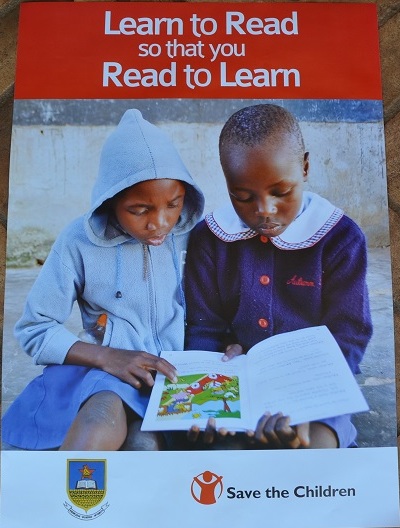
The success of the Happy Readers programme is grounded in strong partnerships. From our creation of engaging learning materials to training teachers and reaching schools across the region, each organisation represented below has played a meaningful role in helping children learn to read — and love reading.
We’re proud of what we’ve achieved together and energised by what’s still to come.
We invite new partners to join us as we expand access to literacy and learning for the next generation.